
Real People
Several real historical figures crop up in Bombshell, alongside the fictional characters.
***Spoiler alert*** Please be aware that this material includes plot spoilers
Mayor Graham
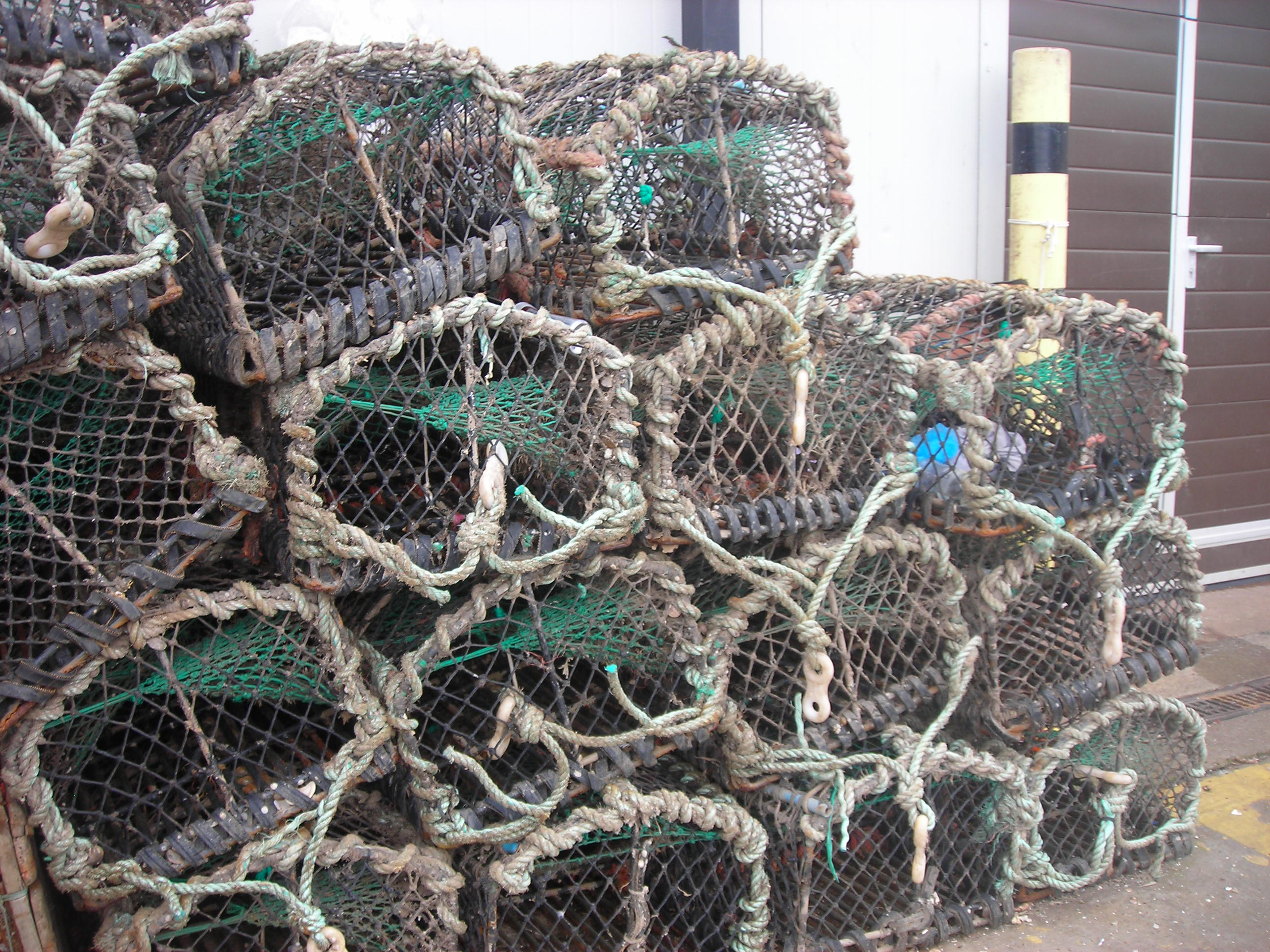
Lobster Pots on Scarborough Harbour
The name Graham is well-known in Scarborough. Indeed it is the name of one of the town’s secondary schools. However, few people will know where it comes from. Christopher Colbourne Graham was mayor of the town from 1913 to 1919. He was therefore the mayor during the First World War and was responsible for the project to build what is now Scarborough Hospital. It became apparent during the bombardment that Scarborough was in desperate need of a better hospital.
In 1918, he founded Graham Sea Training School when he bought Paradise House below the castle and donated it to the council. He then bought the training ship, Maisie, which was named after his daughter, and gave it to the school. The school closed down in the 1970s and became absorbed into Scarborough Boys High School. Paradise House is now a block of flats.
Christopher Graham was a technical chemist and had worked at the paint and varnish company Blundell, Spence and Co in Hull. The Grahams moved to Scarborough in 1905 and lived in Oriel House in Oriel Crescent. Christopher became a Justice of the Peace in 1911 and the town’s mayor in 1913. Their son, Hugh, however, had been a boarding pupil at the prep school, Bramcote, in Filey Road, Scarborough, a few years before his family’s arrival in the town.
Hugh went to Leeds University and received a BSc in Science. In September 1914, he enlisted in the Royal Army Medical Corps and in 1917 was gazetted to the 9th Regiment of the Yorkshires. He was killed on October 1st, 1917, in Flanders Fields. He was 26. His name can be found on a neglected monument in the Manor Road cemetery in Scarborough, alongside that of his mother, Mary, who died in 1910, and his father – Mayor Christopher Colbourne Graham, who died aged 86 in 1943.
A portrait of Mayor Graham is in Scarborough Art Gallery.
 Harry W Smith
Clara’s brother Harry mentions trying to meet the borough engineer Harry Smith for his story on the opening of the South Bay Pool.
Harry W Smith was responsible for almost everything that makes Scarborough what it is today. He became the borough engineer in 1897 and remained there for 36 years until his retirement in 1933. At his retirement speech in the Town Hall, he told staff that he had created 300 acres of new public pleasure grounds during his service, and had spent no less than £1 million of public money.
His gardens included those on the South Cliff including the Shuttleworth Gardens; the Italian gardens; Peasholm Park; Peasholm Glen; Northstead Manor; Alexandra Gardens and the St Nicholas Gardens around the new Town Hall – a building which he himself had acquired for the town from a private owner.
He was behind the South Bay Pool and the first beach huts, and the building of the Floral Hall.
He brought in small locomotives to open the miniature railway to connect Peasholm with Scalby Mills and in 1932, his idea for an open-air theatre came to fruition in Northstead Manor Gardens. Both those ventures are still going strong.
Harry Smith was also responsible for the town’s earliest slum clearance and house building scheme in what became Friarage.
He died in August 1944.
In 2006, a blue plaque in honour of Harry Smith was unveiled by his granddaughter, Duna Pashby, at his former home in Westbourne Grove.

The open-air bandstand of the Spa
Alick Maclean
Alexander Maclean was born and educated at Eton where his father was director of music. Alick won the Moody-Manners prize for writing the best one-act opera, which he had done with the help of his sister, Sheridan Ross, as his librettist. He became the musical director of the Wyndham Theatre in London in 1899 and came to Scarborough in 1912, where he founded the Spa Orchestra. Clara, in Bombshell, sees him conducting there. He remained the conductor of the Spa Orchestra until his death in 1936.
See Alick in action at the Spa on this early Pathé talkie film.
Alfred Shuttleworth
Mr Shuttleworth’s clock tower on the Esplanade makes several appearances in Bombshell and Harry Thornton mentions that Shuttleworth had it built so he wouldn’t have to have a clock in the house. This is true. Alfred Shuttleworth lived in Red Court on the Esplanade and as a wealthy businessman from a Lincolnshire engineering company, he often used his money to get what he wanted. In 1898, an ugly revolving viewing tower was built on the castle headland. It had been built by the London engineer Thomas Warwick who had built similar attractions in other seaside resorts in the country. The Warwick Tower could be seen from all over the town and Shuttleworth was so angry that his view of the cliff was spoiled, that he bought the tower in 1907 and demolished it. Later he bought the house across the road from Red Court, Holbeck Hurst, which had belonged to a former mayor, and had that demolished too – just so he could see right across the bay. He built gardens in its place, which he later donated to the town via his friend – borough engineer Harry Smith. The gardens are now known as the Shuttleworth Gardens.
Red Court has since been converted into flats and its exterior doubled as St Aidan’s Royal Free Hospital in the recent ITV 1960s-based drama, The Royal, starring Wendy Craig.
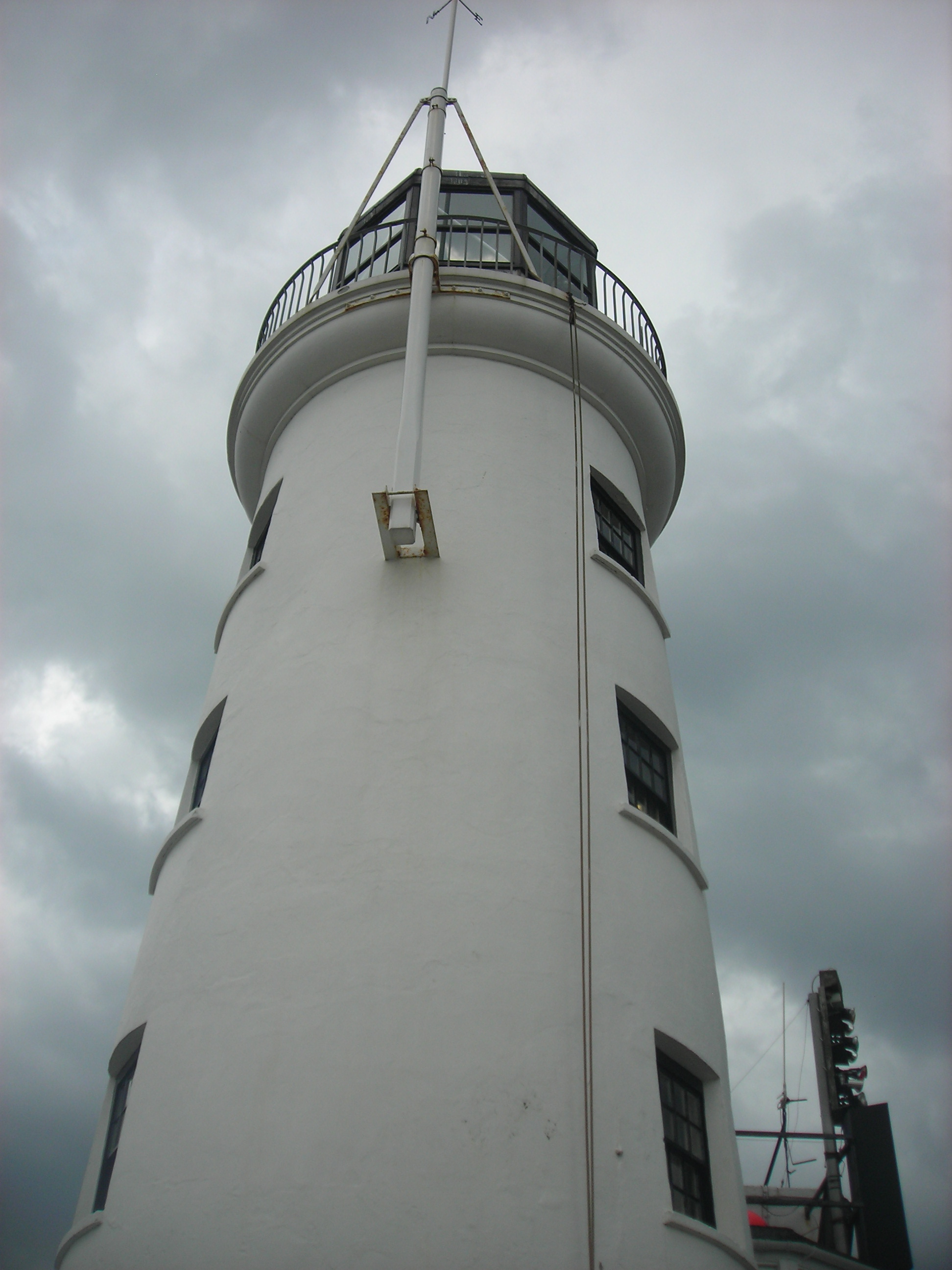
Scarborough Lighthouse
Ludwig von Reuter
Reuter was born in 1869 and became a cadet in the Imperial German Navy aged 16. By 1910, he was a captain, commanding the heavy cruiser SMS Yorck.
Two months after the outbreak of World War One, he was made captain of SMS Derfflinger. He commanded Derfflinger during the East Coast Bombardment and the Battle of Dogger Bank.
In 1915, he became Commodore commanding officer of the Second Scouting Group, leading them during the Battle of Jutland. He was promoted to Rear Admiral in 1916.
After the armistice of November 1918, von Reuter was asked to take command of the entire High Seas Fleet as it was interned at Scapa Flow after Admiral Franz von Hipper refused to lead them into internment.
Following the deliberate scuttling of the fleet, Reuter was made a prisoner of war in Britain. He did not return to Germany until January 1920. Initially hailed a hero in his home country, he was asked to resign from the Navy because the Treaty of Versailles had left Germany with a very small navy and there was no job for him.
He moved to Potsdam and became a councillor. He was made a full admiral in 1939 to celebrate the 25th anniversary of the Battle of Tannenberg. He died of a heart attack in 1943.
 [All photos by Joanna Vaughan]
 Joanna Vaughan