
Locations
Bombshell is set in Scarborough in 1914. Here is a tour of the locations that feature in the novel.

The Grand Hotel in Scarborough
The Grand Hotel
The Grand Hotel in Scarborough, where Bombshell’s Clara works, was designed by Cuthbert Brodbrick and when it was completed in 1867, became Europe’s first purpose-built Grand Hotel.
Its building was designed around the theme of time – 12 floors; 52 chimneys; 365 bedrooms and four towers for the seasons. It was built in the shape of a ‘V’ in honour of Queen Victoria.
It included every possible luxury – and even had extra seawater taps in its bathrooms that drew water directly from the sea. Bathrooms were large enough to acccommodate maids and manservants who attended guests at bath times. Bedrooms were fitted with heavy furniture and heated by coal fires. There was a ballroom, coffee shops and bars and the lower floors held kitchens and a laundry – all served by a small-gauge railway line that carried things along the hotel.

The Grand Hotel staircase
Its grand staircase was designed to be wide enough for two Victorian ladies in wide crinolines to be able to pass comfortably with their escorts, while at the same time being admired from the balcony above.
The Grand Hotel was one of the first establishments in Britain to install a lift – it was called “an ascending room for passengers”. It was worked by a counter-weight and controlled by a rope through the floor and ceiling of the cabin.
The top floor of the hotel was used for maids and servants and hotel staff. Its rooms are smaller and its corridors are narrower – as maids were not allowed to wear crinoline.
The hotel was bought by Butlins in 1978 and at present is owned by Britannia Hotels. It now caters for the budget end of the market and room service is very much a thing of the past!
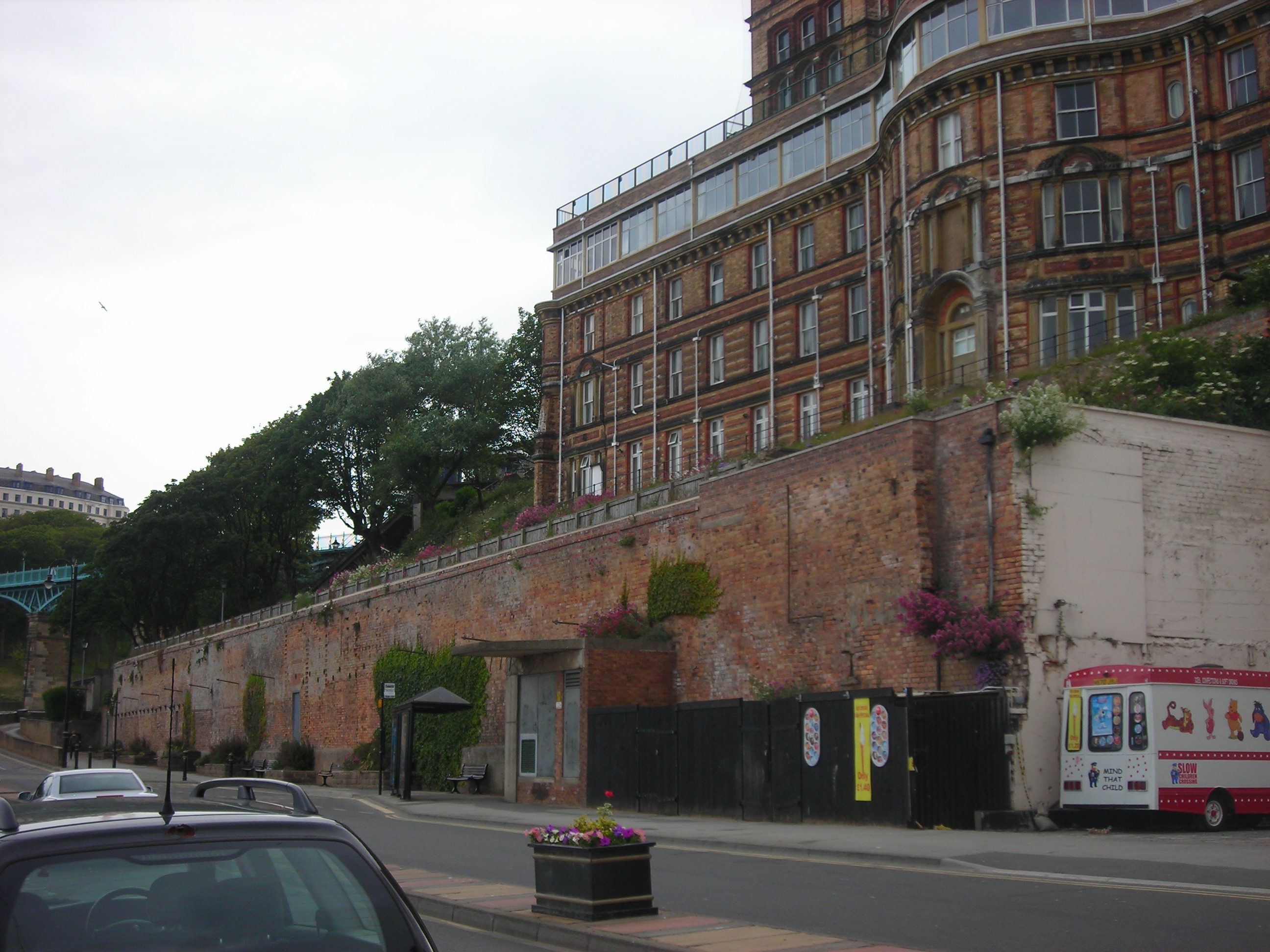
The remains of the Grand Restaurant and Picture House as it is today – the Grand Hotel is above
The Grand Restaurant and Picture House
The Grand operated a huge separate restaurant, just below its hotel, on the sea front to cater for excursionists. It stretched right from the beginning of Foreshore Road to the Olympia. You could book a table on the day by posting a postcard from the post office! It opened a picture house adjacent to the restaurant during the Easter weekend of 1914. It later housed an ice-rink. The building was destroyed by fire in 1949 and largely demolished. The site is empty apart from an ugly wall.
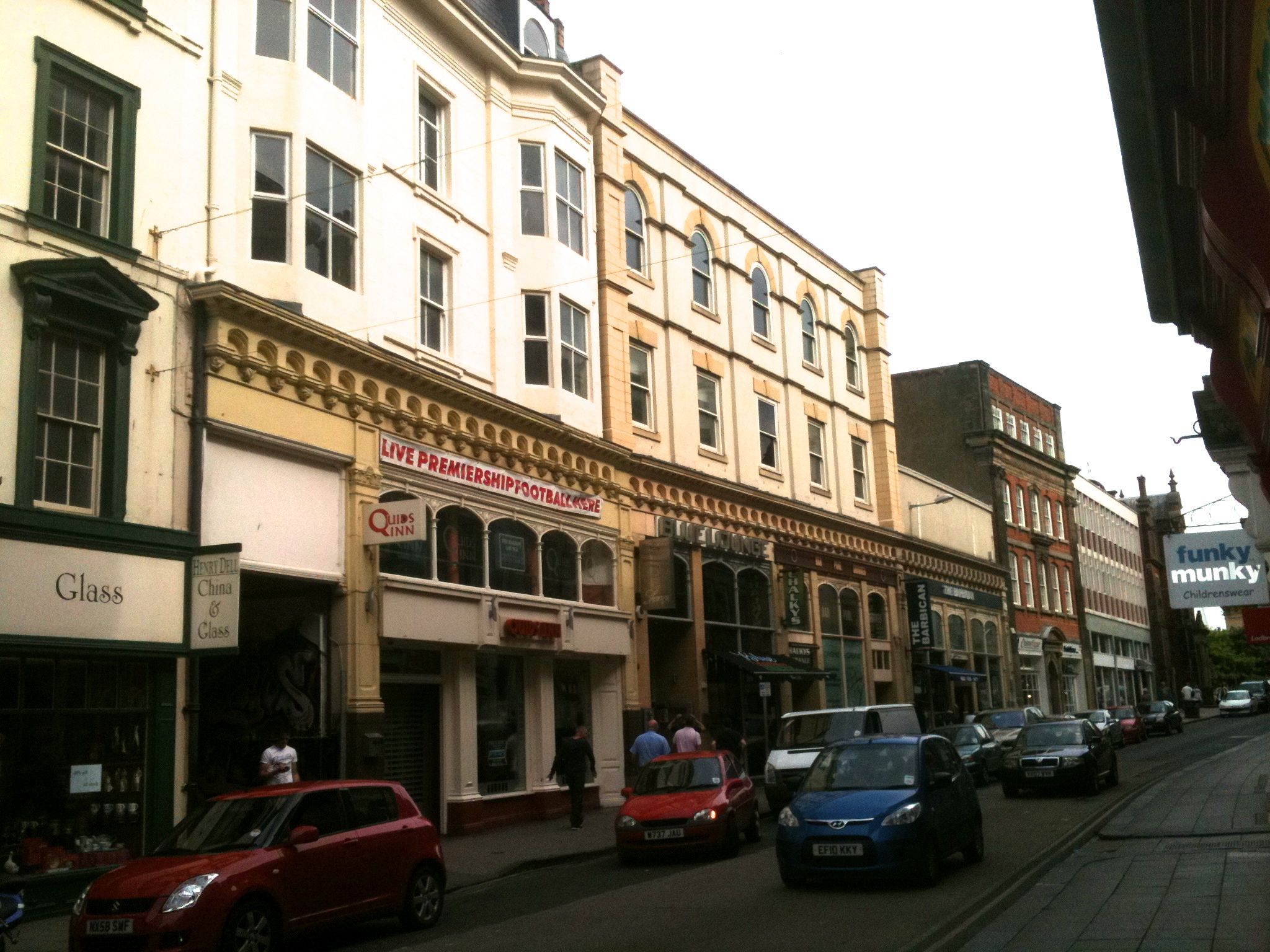
The former Marshall and Snelgrove department store in St Nicholas Street – as it is today
Marhsall and Snelgrove
Because Scarborough catered for the wealthy classes in the summer, branches of prestigious department stores were opened in the town so that the fine ladies of gentlemen could still shop in style. Marhsall and Snelgrove was a department store on the north side of Oxford Street in London, founded by Yorskshireman James Marshall in the 1830s. The company opened a Scarborough store in 1840 – first in rented property in Huntriss Row and moved to St Nicholas Street in 1851.
It housed a workshop at its rear and a dormitory for staff on its top floor. Doris Bracewell in Bombshell is employed as a seamstress here.
Marshall and Snelgrove became part of the Debenhams group and the Scarborough store closed in 1973. It remained empty for many years with trees even growing out of its roof! It is now home to several bars and nightclubs.
Belle Vue Street
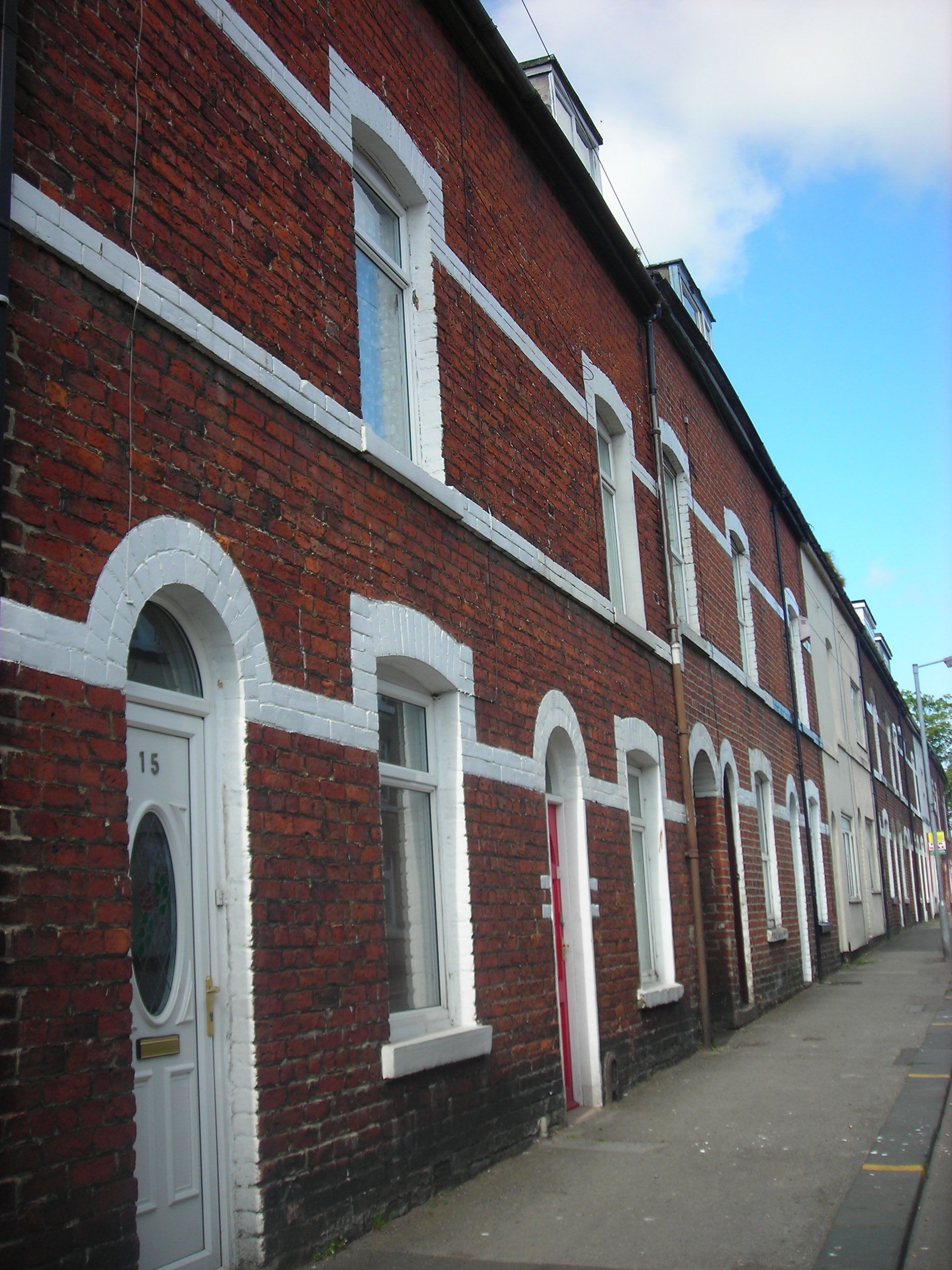
Belle Vue Street in Scarborough – as it is today
The Victorian terraced street where Clara Thornton lives was built in the 1850s as part of a council scheme to provide good-quality family housing for the increasing number of skilled labourers and tradesman that were needed now the railway boom was now bringing more visitors to the town.
Victoria Road and Gladstone Road were the main streets, named after, of course, the Queen and Prime Minister, while other nearby streets were named after explorers – Livingstone, Franklin, Nares, Murchison, Raleigh, or local men such as the shipbuilder James Tindall, William Morgan who owned the Aquarium and a local landowner Thomas Candler.
Kirby’s Fishmongers which appears in Bombshell is based in Victoria Road. There would have been a fishmonger’s in the street at the time but the shop in Bombshell is completely fictional.

Victoria Road where Kirby’s Fishmongers is based.
Although a main thoroughfare, Victoria Road was not laid out with tram lines. The trams only crossed over the road from Hanover Road (now a small narrow street and impossible to imagine that a tram went down it) and into the residential street of Barwick Street and then out to Prospect Road, Manor Road and Scalby Road.
The new shop that was being built on the corner of Belle Vue Street in 1914 became a new Co-op shop. The building still stands and has the year 1914 carved in stone above the shop. It has been Squires carpet shop since 1946.
The Kirby family live on Norwood Street, which is wider than Belle Vue Street and its houses larger, with bay windows.
Doris’s father works at the Rowntree’s furniture warehouse in nearby Wooler Street. The building is a fine Victorian building and is still there. It has been converted into flats and is called Kealia Court.
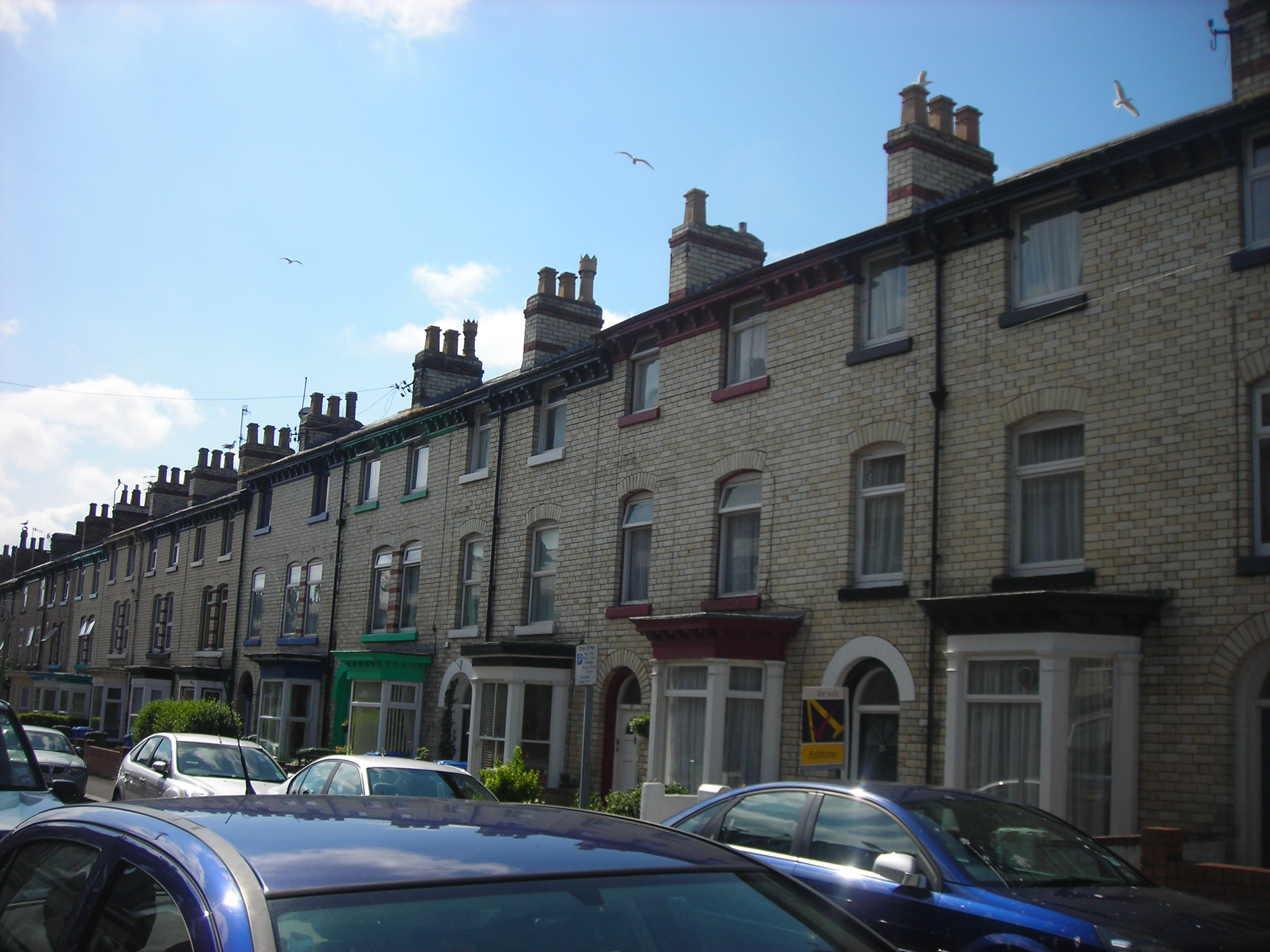
Norwood Street, where the Kirbys live
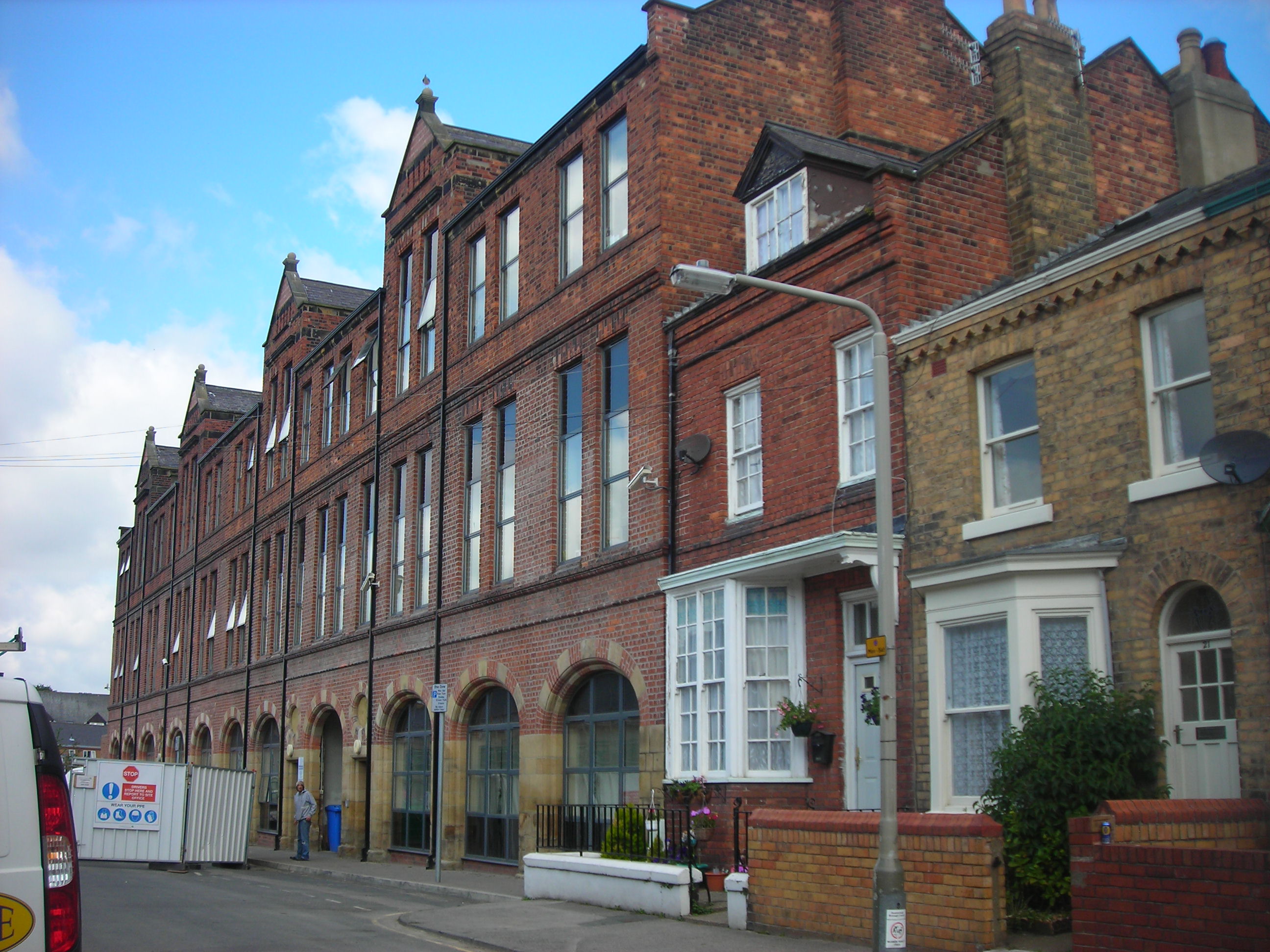
Former Rowntree’s warehouse in Wooler Street – now housing
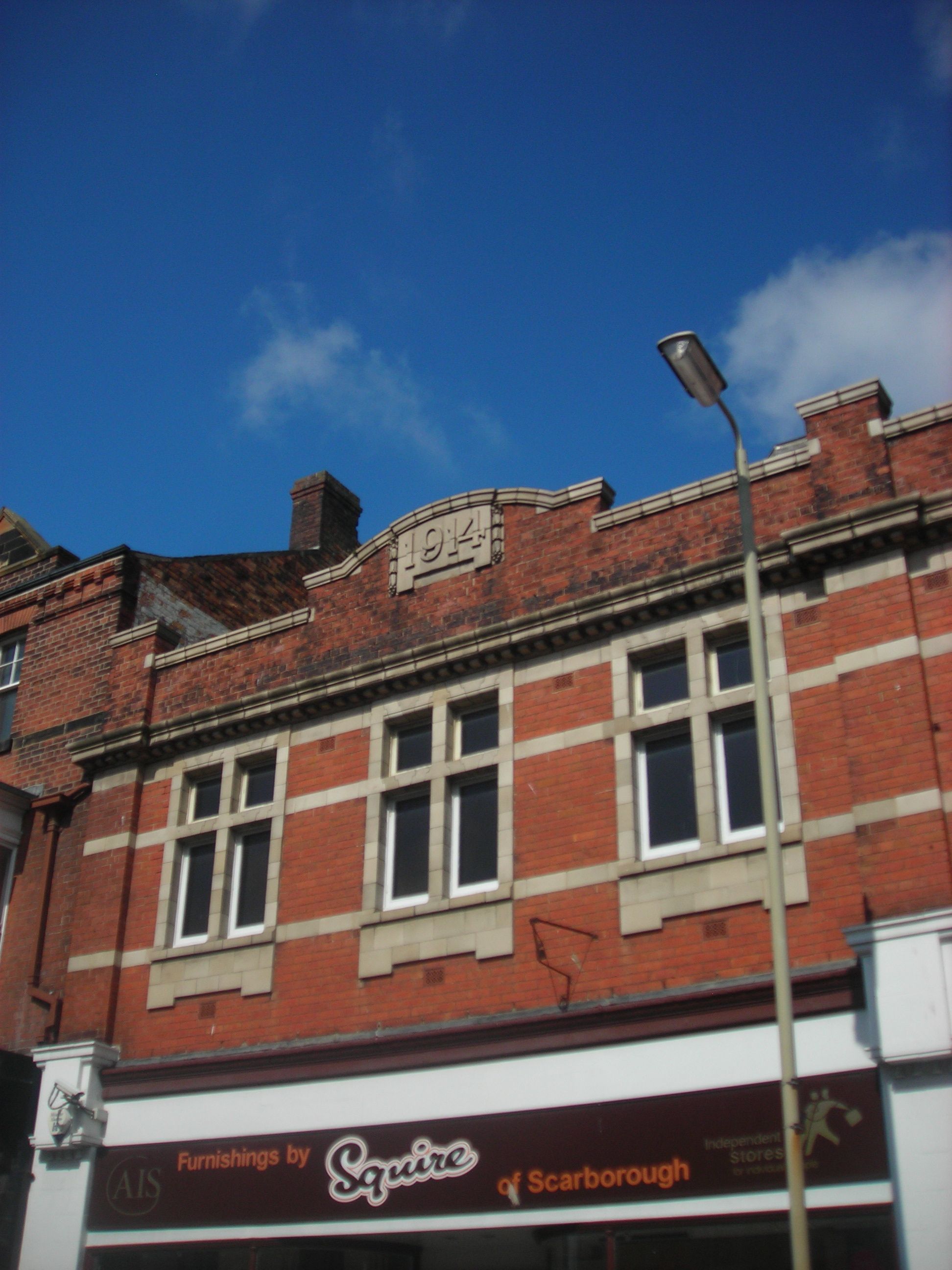
The former Co-op shop that was a building site for much of the plot of Bombshell
Cinemas and Theatres
In 1914, much of the entertainment on Scarborough’s seafront was controlled by Will Catlin, the so-called “King of the Pierrots”. Catlin had been entertaining visitors with his Pierrot shows on the sands since 1896, but moved to the roof of the Grand Restaurant in 1908 because the rent was cheaper. A year later, he had bought The Arcadia next-door – an incredible amusement park that had a mountain railway attraction and fairy river ride. He demolished the building and replaced it with a wooden open-air theatre. It could accommodate 3,000 people and was the first place in Britain to have a retractable roof.
In 1912, he opened the Palladium Picture House further along the road to show silent movies. Designed in the Italian Renaissance style, it had a marble frontage with huge windows to let in light to the upper tea lounge. Two impressive marble staircases led out of the foyer to the balcony area of the auditorium.
The Arcadian Roof Gardens extended over the whole of the Arcadia and Palladium and, lit by lanterns, hosted many fancy dress dances and carnivals in the open air.
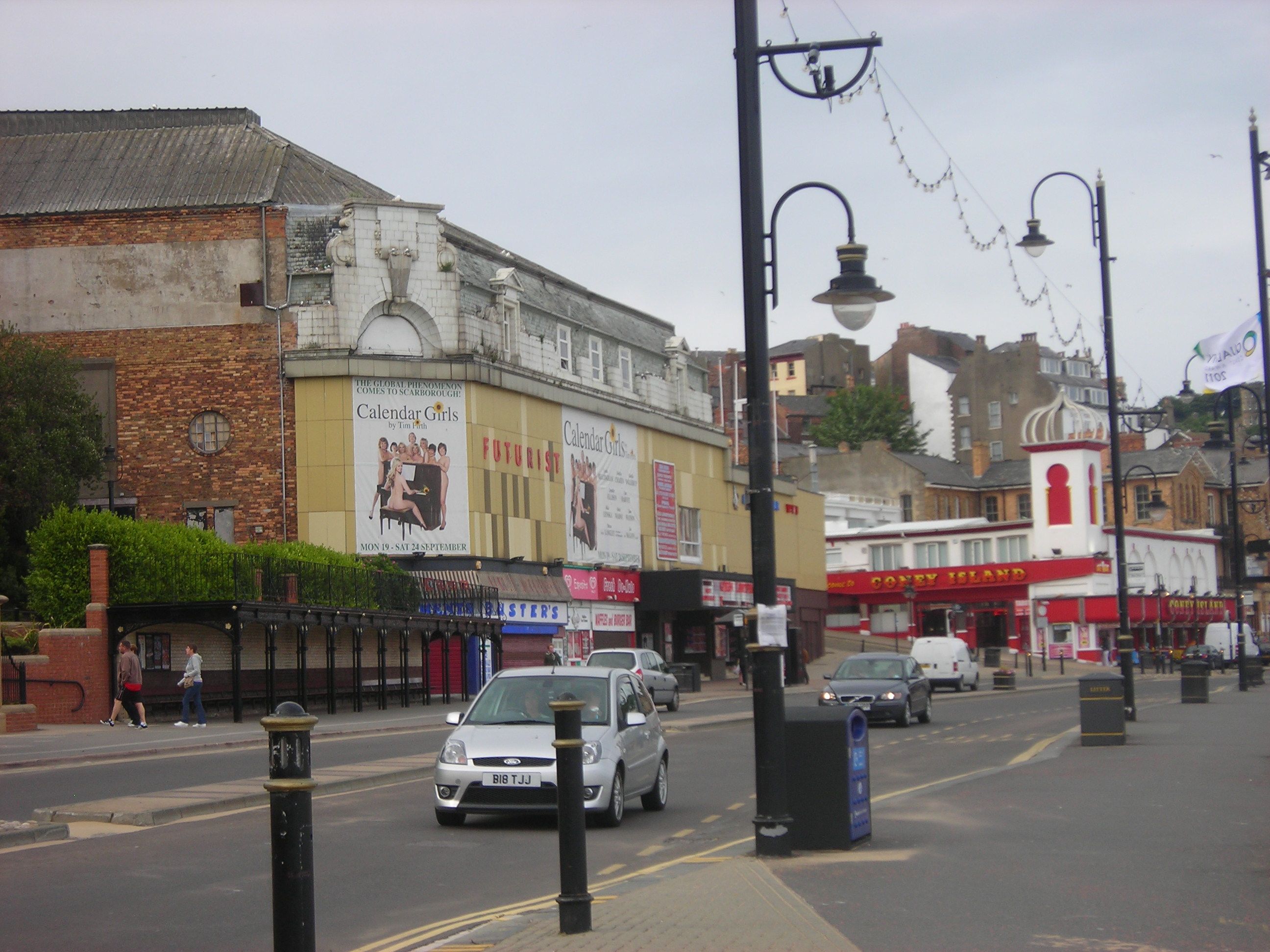
The Futurist Theatre today – on the site of the former Arcadia and Palladium
In 1920, Catlin decided to build a brand new super cinema on the site of the Arcadia. Designed by Frank Tugwell and built by FW Plaxton, this new pioneering complex – the Futurist Theatre – was one of the first of its kind in the country. It housed an American Bar with black and white floor tiles, a 30ft marble counter and an illuminated draught soda stand.
The Palladium was renamed the Arcadia Theatre to host live shows. The Futurist was converted to live theatre use in 1957 and in 1968, the whole building was modernised and expanded. The stage was enlarged and took over much of the site of the former Palladium, and yellow cladding was erected over the original Italianate facade.
The Futurist now faces demolition by Scarborough Borough Council. Join the Facebook campaign to save it here.
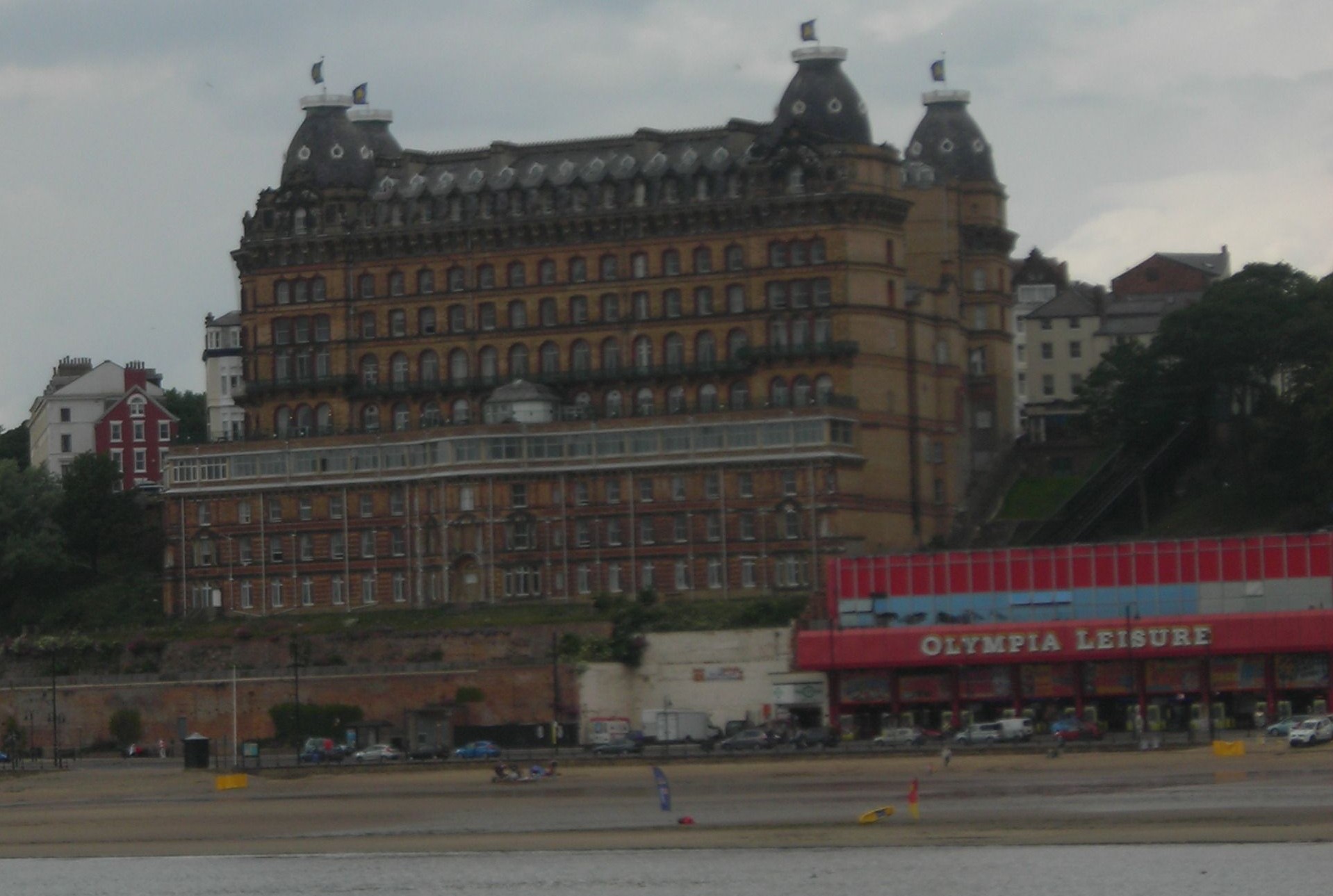
Olympia next to the Grand Hotel – where the old Olympia Picture Palace once stood
The Olympia Picture Palace, next to the Grand Restaurant, on the Foreshore eventually became a ballroom and amusement arcade. It was destroyed by a huge fire in 1975 and raised half a million pounds for the council in insurance. The site was cleared for development and a modern building went up in 1980 – Olympia Leisure, an amusement arcade which has also seen its upstairs as an ice-rink and bowling alley over the last 30 years.
The Aquarium and People’s Palace
The magnificent underground aquarium was a truly hidden gem. Nicknamed Scarborough’s umbrella, it covered more than three acres of land. It was designed by Eugenius Birch, the architect of most of Britain’s seaside piers and erected in 1877 at a cost of £120,000. The Victorians had a passion for aquaria but nothing else could be found like it anywhere else in Europe. To celebrate Queen Victoria’s new title of Empress of India, it was decorated with Indian arches and styles mimicking rajahs’ palaces. It was a labyrinth of passageways and enchanted rooms, with fountains and plants, ballrooms, reading rooms and bars.
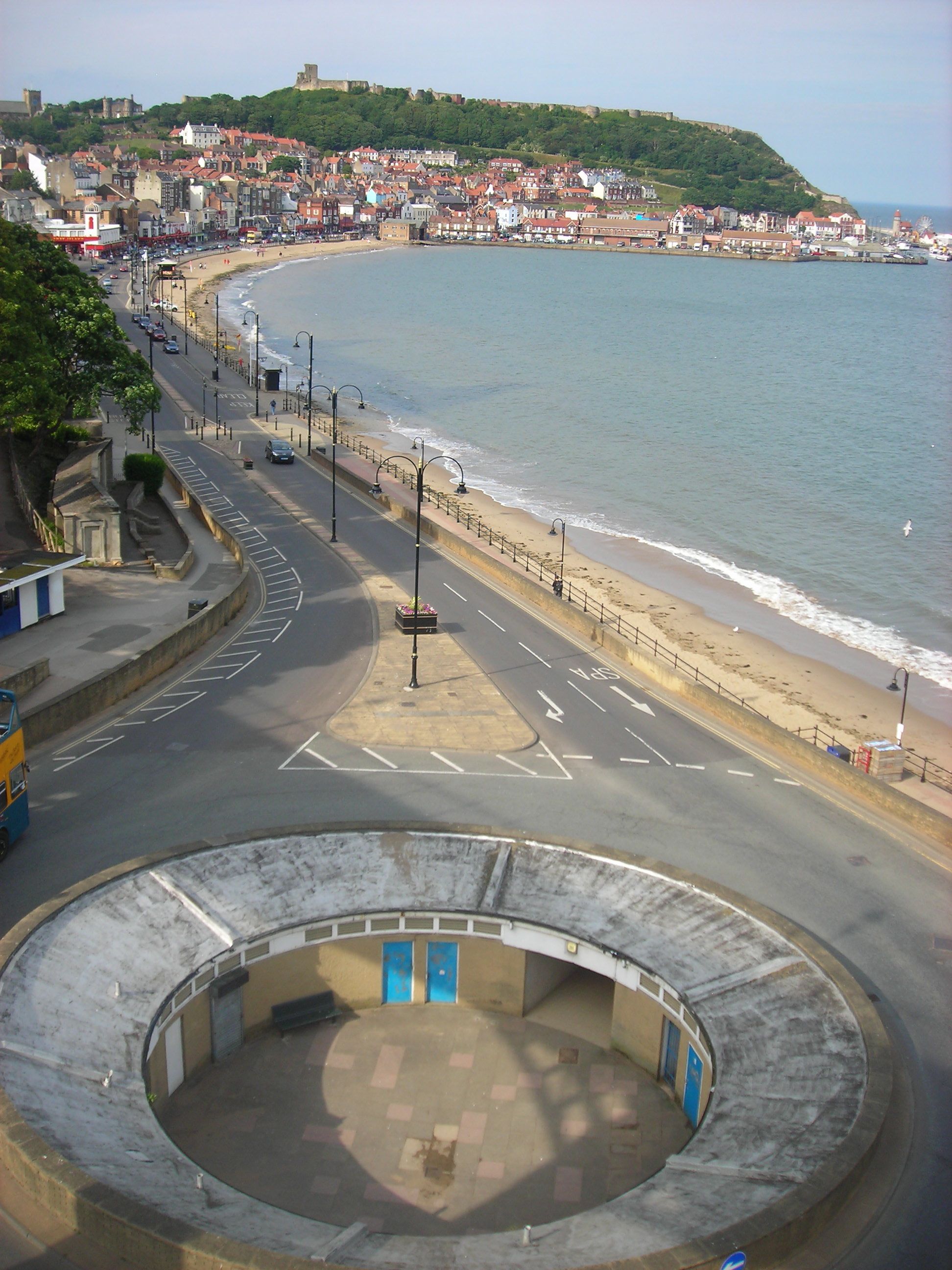
Aquarium Top – now a roundabout above an underground car park
It was never particularly profitable, however, and in 1886 it was bought by William Morgan, manager of Blackpool Winter Gardens, and turned into a down-market attraction. The fish were taken out and its tanks became other attractions. Hundreds came to see the channel swimmer Captain Webb submerged in one for almost three days! There was an alligator pond, monkey house, a Japanese theatre, distorting mirrors and acrobats and performers. A swimming pool was installed and shows were put on by a troupe of “Scientific and Ornamental Swimmers”. In 1913, animals were hired from Glasgow Zoo and included lions, tigers, bears, kangaroos and even wolves!
In 1926, the aquarium was sold to Bridge Bros and Ltd and became Gala Land – a subterranean amusement park. By 1966, it had become damp and empty and was losing money. It was demolished to make way for an underground car park – which remains largely unused.
What were once the glass roofs of the aquarium are now gardens. Aquarium Top where the trams used to turn round is now a roundabout and some residents in Scarborough still refer to it as ‘Aquarium Top’.
Gladstone Road School
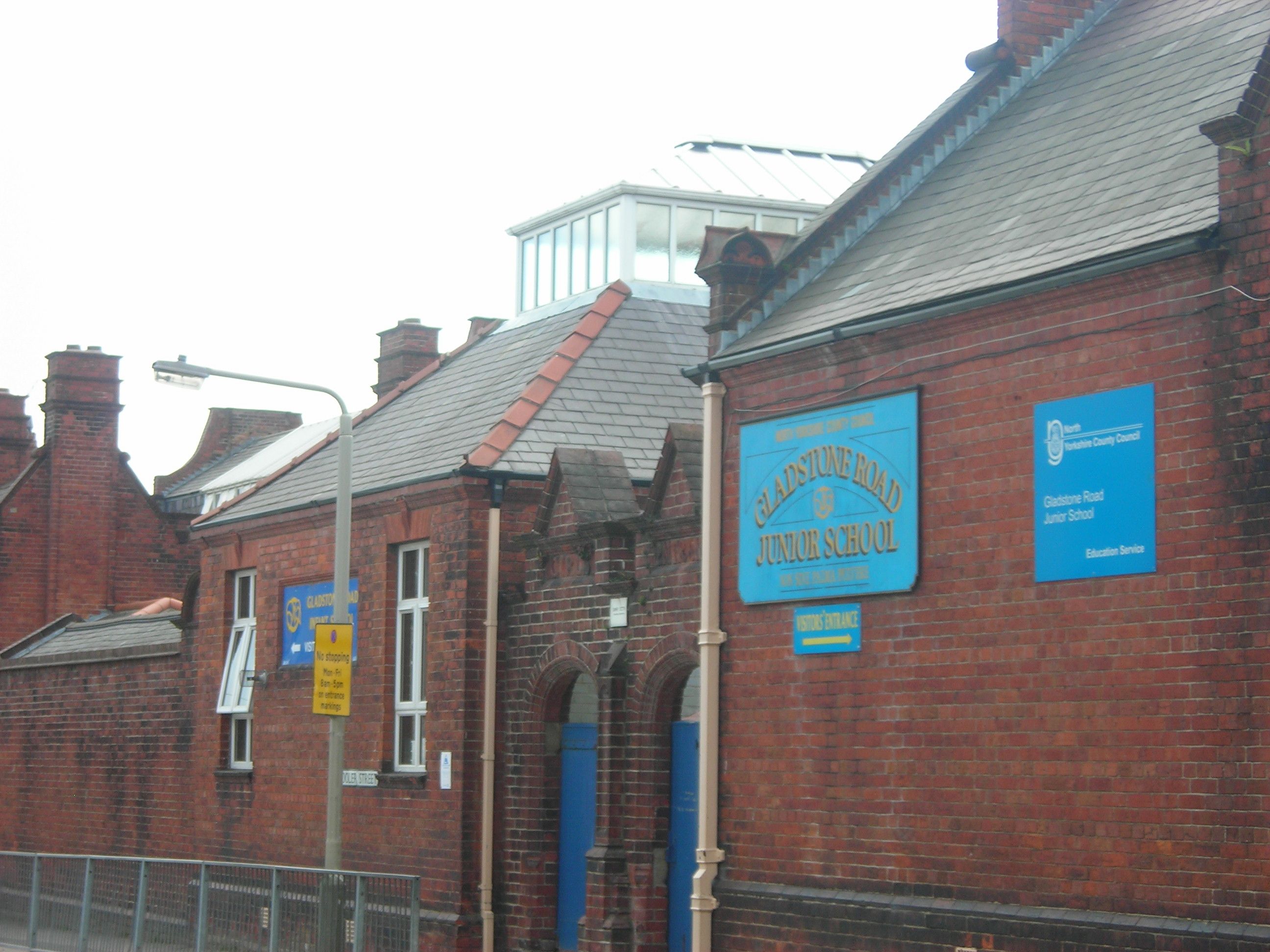
Gladstone Road Junior School – as it is today
Gladstone Road School, where Clara’s brother Johnny is a pupil, was opened in June 1890 following a rapid expansion of the population in that area of Scarborough. It was designed by the architects Tugwell and Hall and at its opening ceremony, the press described it as “the most satisfactory impression desirable”. The classrooms were designed to accommodate up to 75 pupils each!
The school is now split into two separate schools – an Infant and Junior School – they have separate headteachers but occupy the same site. It is now one of Scarborough’s largest primary schools and has a wealth of archives on its website.
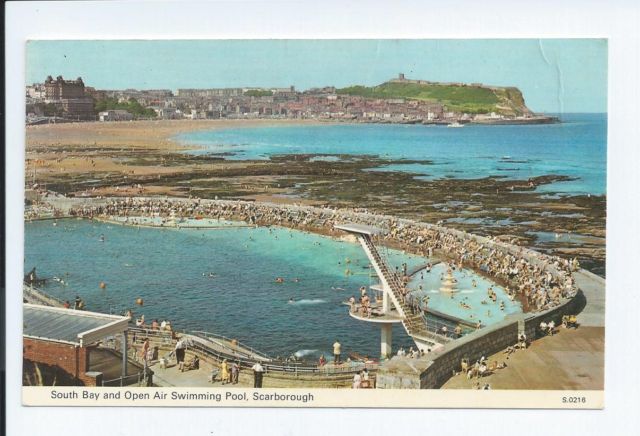
Postcard of Scarborough South Bay pool as it was in the 1970s
South Bay Pool
The South Bay Pool was the final part of the redevelopment of the South Cliff by the Borough engineer Harry W Smith in 1914.
The corporation had bought land from both the Cliff Bridge Company and Mr George Beeforth, the owner of The Belvedere, a private house on the Esplanade above the Spa. New gardens opened on the cliff in 1914 and work began on a brand new open air swimming pool at the foot of the undercliff below them.
When it opened in 1915, it was the largest pool in Europe and had diving boards, a water chute, fountains and up-to-date dressing boxes, accessed from an underground walkway. Beach huts and a cafe were built. It hosted national diving competitions and swimming contests over the years and even in the early 1980s was packed every day in the summer.
Watch this Pathe film featuring a young woman at the pool in 1921!
But the opening of a new pool in the 1980s on the North Bay – Watersplash World (later renamed Atlantis) – saw its popularity decline rapidly. By 1989 the South Bay Pool closed for good. Its site stayed derelict for years, fenced off with huge signs warning people to keep out. A campaign by the Twentieth Century Society to get it listed was lost and it was demolished in 2003 at a cost of £900,000. It was filled with rubble and is now a ‘night sky’ themed open space. The pool features in Janet Smith’s book – Liquid Assets (featuring the best lidos in Britain and published by English Heritage). It is also included on the Lost Lidos website. Atlantis has also now been demolished after sitting derelict for years.

Bonnet’s on St Nicholas Street. Further down the street is Marshall and Snelgrove
Bonnet’s
Bonnet’s was established as a tea room in Scarborough by Louis Bonnet in 1880 on the corner of St Nicholas Street. This is the corner where we first meet Clara as she leaves work and meets Doris, coming from Marshall and Snelgrove, just down the road.
Bonnet’s moved to Huntriss Row in 1960 and specialises in handmade chocolate. Over the years, the shop has been a chocolate shop and gift shop. It is now owned by the Fairfax family and is a tea room once more.
Peasholm Park
Peasholm Park was created for the people of Scarborough when the council bought Tucker’s Field on the North Bay. Borough engineer Harry Smith had the idea of creating an oriental garden and Japanese statues were bought from Killerby Hall in Kirby Misperton (now Flamingo Land) and lakes and exotic flowers were put in. A pagoda and cascade were put on the island in the centre of the park and this eventually became Tree Walk Wonderland in 1953.
The park fell into disrepair in the early 1990s and the island was closed for a time following an arson attack. The park has recently undergone a regeneration project and still operates miniature naval battles on its lake. Visit the Friends of Peasholm Park site.
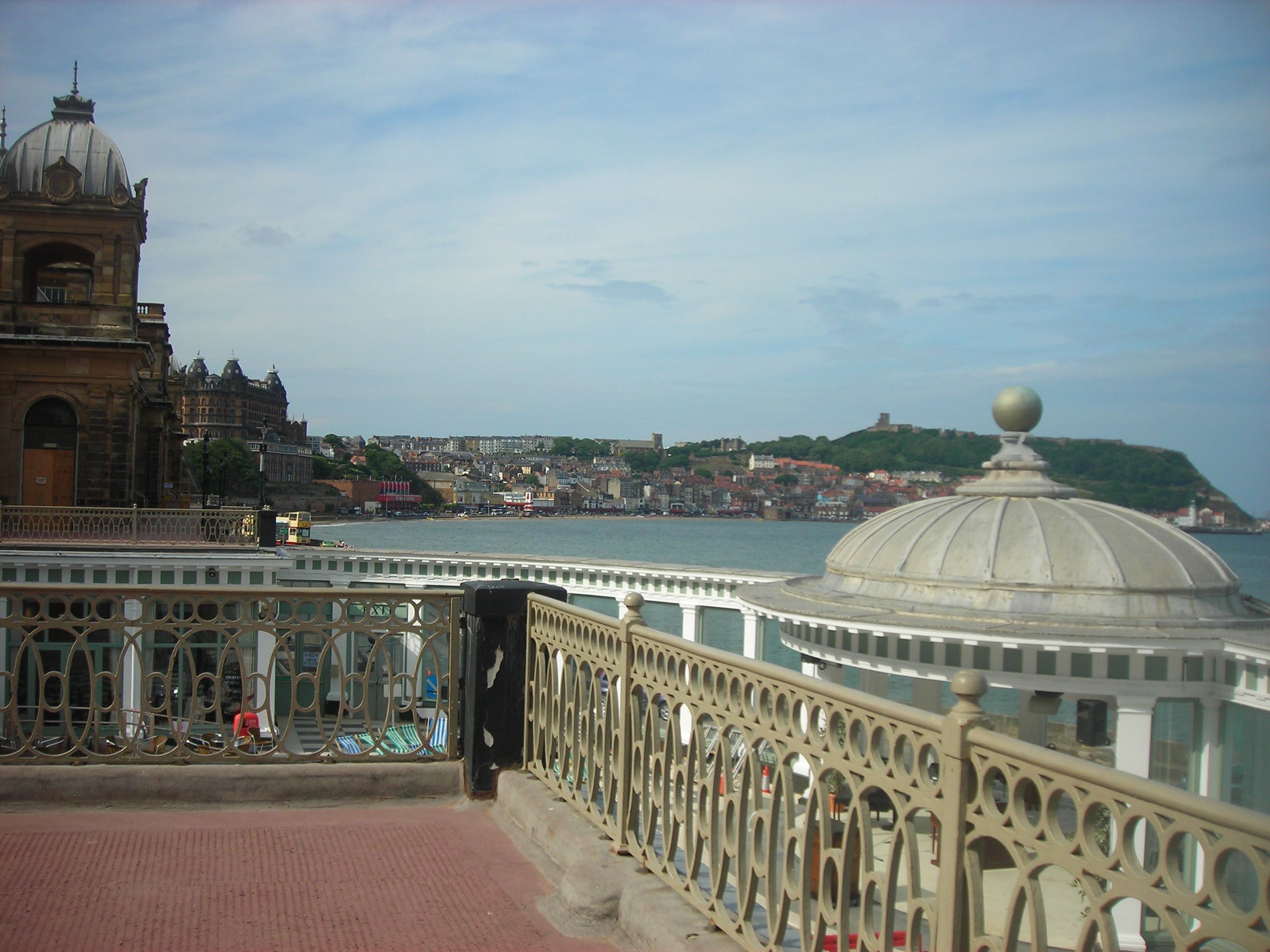
The roof of Scarborough Spa – with the castle headland in the background
Scarborough Spa
The current Scarborough Spa building was opened in 1880 after fire destroyed the previous one. This southern part of Scarborough had been thriving ever since Mrs Thomasin Farrer found natural spring water bubbling from its rocks and wrote of its health benefits in the 17th Century. The spa tap room in the building however was sealed off in the 1930s when the water was declared unfit for human consumption, but the Spa continued to thrive.
In the Victorian and Edwardian eras, the Spa was the centre of great entertainment and attracted the best actors, musicians and music hall acts in the country to its Grand Hall and outdoor ballroom. The Spa Orchestra was founded by Alick Maclean in 1912.
The Spa underwent a £3 million regeneration project in 2010. The open-air ballroom featured in the 1998 film, Little Voice, with Jane Horrocks and Euan McGregor.

Cliff Tramway by the side of the Grand Hotel and the McBean steps
Cliff tramways
Scarborough has had a total of 5 cliff railways.
The first funicular railway in Britain was built near the Scarborough Spa in 1873. It used seawater pumped by gas engines through a hydraulic system. This was later replaced by steam pumps in 1879 and later an electric engine. The lift was made fully automatic in 1997.
The Central Tramway opened by the side of the Grand Hotel and the McBean Steps in 1881. It is a steep 1-in-2 gradient and is still running.
The St Nicholas Cliff Lift at the other side of the Grand opened in 1929. The lift was closed in 2007 due to high costs to maintain health and safety standards.
The Queen’s Parade Lift, opened in 1878 to take visitors from the North Bay to the Promenade Pier, ran for only a few years as it was beset with accidents and failures.
The North Cliff Lift was built in 1930 but closed in 1996, amid rumours that it had been sold to the Americans. It was actually dismantled and is believed to be still sitting in storage in Cornwall.
Carnelian Bay
Nowadays largely known as Cornelian Bay, this quiet bay sits between the headlands of White Nab and Knipe Point. It is so called because examples of the semi-precious stone carnelian sometimes wash up on the shore. Today there are are two Second World War pillboxes on the sands.
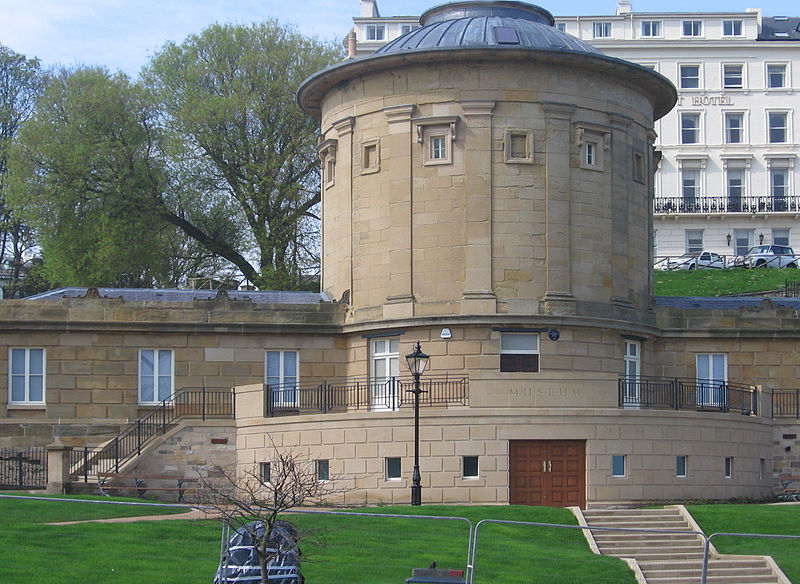
The Rotunda Museum in Scarborough
Rotunda Museum
The Rotunda is the second oldest purpose-built museum in Britain. (The first is the British Museum in London). The Rotunda was built in 1829 to the specifications of William Smith, the father of English geology, who worked at Hackness, near Scarborough.
Its most famous exhibit is the Gristhorpe Man skeleton – a Bronze Age relic that was found at nearby Gristhope in 1834.
The Rotunda reopened in 2008 following a £4.2 million refit. It is now part of Scarborough Museums Trust.
Scarborough Castle
Scarborough Castle – as it stands today
Scarborough’s castle was built on a naturally defensive headland of 300ft steep cliffs. There is a stone curtain wall that dates from the 12th century and the keep, which replaced a wooden castle, was built by Henry II between 1159 and 1169.
By the 13th century, Scarborough was a thriving port and the castle became a powerful base. In 1484, Richard III stayed there while forming a fleet to fight the Tudors.
During the English Civil War, Royalists under the command of Sir Hugh Cholmley retreated to the castle in 1645 and underwent a five-month siege from Parliamentarians who fired at the keep from nearby St Mary’s Church with the largest cannon in the country, partially destroying the keep’s walls. The castle changed hands several times between Royalists and Parliamentarians during the war and eventually returned to the Crown following the restoration of the monarchy in 1660.
In the Jacobite Rebellion of 1745, the castle was fortified with gun batteries and barracks. The Master Gunner’s House was built and served as accommodation until the 20th Century. The threat of a French invasion during the Napoleonic Wars lead to a permanent estabilshment of a garrison that remained until the mid-19th century.
The castle became a tourist attraction in late Victorian times and has been managed by English Heritage since 1984. The Master Gunner’s House houses an exhibition which includes pieces of German shells from the 1914 bombardment.
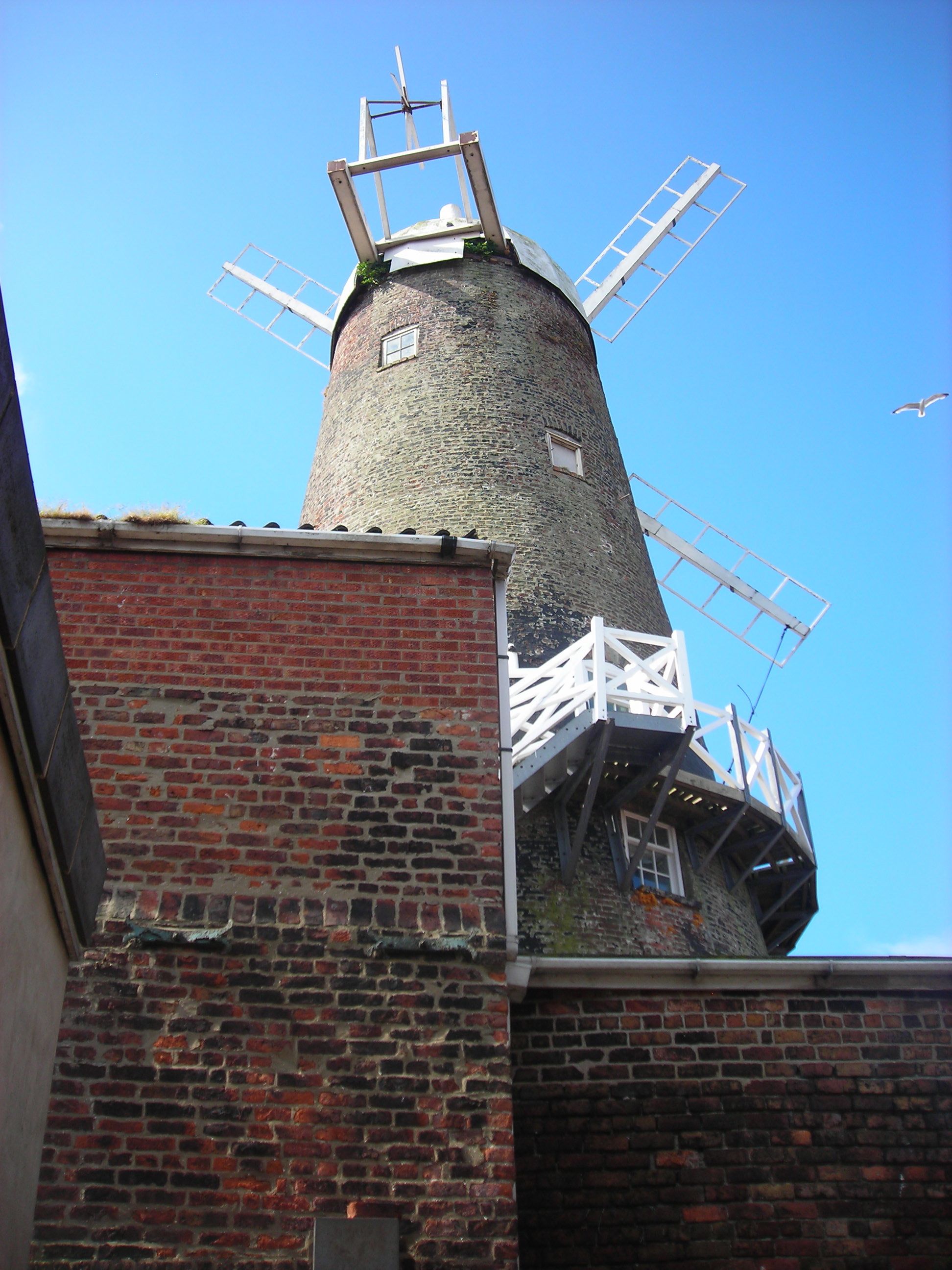
Scarborough Windmill – as seen from the streets behind it
Scarborough Windmill
The windmill behind Clara’s house on Belle Vue Street dates from 1784. Windmills have been on the site for more than 400 years and during the siege of Scarborough Castle in 1645, it was used as an observation post for the Parliamentarians.
The sails worked until 1898, when they were replaced by a gas turbine, and the windmill continued to grind corn until 1927. In 1985 a developer applied to demolish it but it was refused and the windmill was subsequently bought and turned into a hotel.
[The majority of the photos on this site were taken by the author]
 Joanna Vaughan