
Historical Info
 The Scarborough of 1914 was very different to the North Yorkshire seaside resort of today.
Established as a settlement in the late Bronze Age and later home to a Roman signal station and then Norman castle, Scarborough eventually grew to become one of Britain’s most fashionable holiday destinations. Visitors came to take the spa waters that were discovered there in the 1620s and once the railway arrived in the town in Victorian times, Scarborough’s reputation had grown so much that it became known as the “Queen of Watering Holes”. By 1914, the town boasted dozens of high-class hotels, restaurants that could seat several thousand at a time and many picture houses and theatres. There were huge department stores that catered for the wealthy visitors including a special branch of the Oxford Street store, Marshall and Snelgrove.
Sadly, Scarborough is now a shadow of its former self. By the 1980s, cheap flights meant people were no longer holidaying in Britain. Many of the hotels fell on hard times. Buildings that had once oozed opulence and splendour had fallen victim to the bulldozers or often stood forgotten. The Foreshore that had once attracted the crowds off the beach into its picture houses, theatres and rooftop dances is now a haven of amusement arcades and bargain shops. But look beyond their vivid frontage, take a boat out along the coast and look back at the Foreshore and the shape of the buildings that once housed seawater baths, a super cinema, a hospital – and just fleetingly you will glimpse into Scarborough’s rich past.
To find out more about specific locations in Bombshell, click here.
When war broke out in August 1914, Scarborough had just celebrated its most successful Bank Holiday for years. The holiday makers had flooded into the town, basking in the heatwave. There was a new boating lake in Peasholm Park on the North Bay, new gardens had just opened on the South Cliff and work was starting on what was to become the largest lido in Europe – the South Bay Pool. The threat of a war sparked by the assassination of an archduke hardly anyone had heard of, in a country not many people could place on a map, did not seem that important or relevant. Within four months all that would change.
***Spoiler alert*** If you have not yet read Bombshell, please be aware that the following information could spoil some of the plot!
The Bombardment of Scarborough
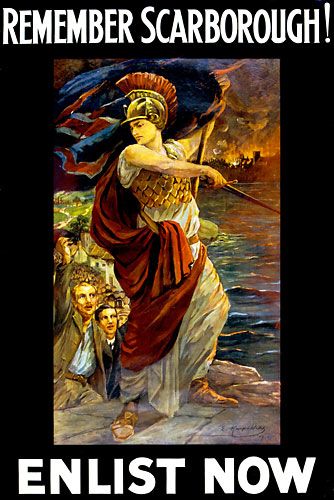 In the early hours of Wednesday December 16th 1914, Scarborough was shelled by the German battleships SMS Derfflinger and SMS Von der Tann. A third ship, the Kohlberg, travelled down the coast laying mines while the town was bombarded with more than 500 shells. The purpose of the attack remains unclear and historians are still speculating about it.
Did the Germans really believe it was still a fortified town because their maps of the English coast were out-of-date? Did they have intelligence about the wireless signal station in Falsgrave Park and were targeting it? Did they just seize their opportunity after surveying the coast the previous week and discovering that that part of the East Coast was clear of mines? Or was the High Seas Fleet just simply showing the British Navy what it was capable of? Whatever the reason, the bombardment of one of the country’s most prestigious seaside resorts was seen as an outrage by the entire nation. It was the first attack on British civilians since Viking times and there was a huge public outcry at the loss of 18 innocent lives, which included three children and a baby. Recruitment posters appeared urging people to “Remember Scarborough” and join the fight against the Hun. The bombardment earned the Germans the nickname “baby killers” and for many Britons was the root of a deep hatred for the entire German population – a hatred that was to last for generations.
 Joanna Vaughan